
Franciscan symbols have inspired Christians for more than eight centuries. These simple yet meaningful signs reflect the values taught by Saint Francis of Assisi, including humility, peace, compassion, prayer, service, and deep respect for God’s creation. Whether you visit a Franciscan church, read about the Franciscan Order, or explore Christian history, you will notice these symbols appearing in artwork, architecture, clothing, and prayer.
Understanding Franciscan symbols and their meanings helps believers appreciate the spiritual heritage of the Franciscan family. These symbols are not merely decorative. Each one tells a story about faith, sacrifice, love for God, and care for others.
In this guide, you will discover the most important Franciscan symbols, their historical background, and the spiritual lessons they continue to teach Christians around the world.
What Are Franciscan Symbols?
Franciscan symbols are visual representations of the beliefs, mission, and spirituality of the Franciscan tradition founded by Saint Francis of Assisi in the early thirteenth century.
These symbols remind believers to live according to the Gospel through:
- Humility
- Simplicity
- Love for Christ
- Service to the poor
- Peace and reconciliation
- Care for all creation
- Joyful faith
Over time, many Franciscan communities adopted these symbols as expressions of their shared identity. Today they continue to inspire priests, religious sisters, friars, lay Franciscans, and countless Christians.
Why Symbols Matter in Franciscan Spirituality
Saint Francis believed that faith should be lived rather than merely spoken. Symbols became powerful reminders of Gospel values because they communicate spiritual truths without many words.
Franciscan symbols encourage believers to:
- Remember Christ’s sacrifice.
- Practice humility every day.
- Live peacefully with others.
- Care for nature as God’s creation.
- Trust God’s providence.
- Choose simplicity over materialism.
Even today, these symbols continue to encourage prayer and spiritual reflection.
The Tau Cross
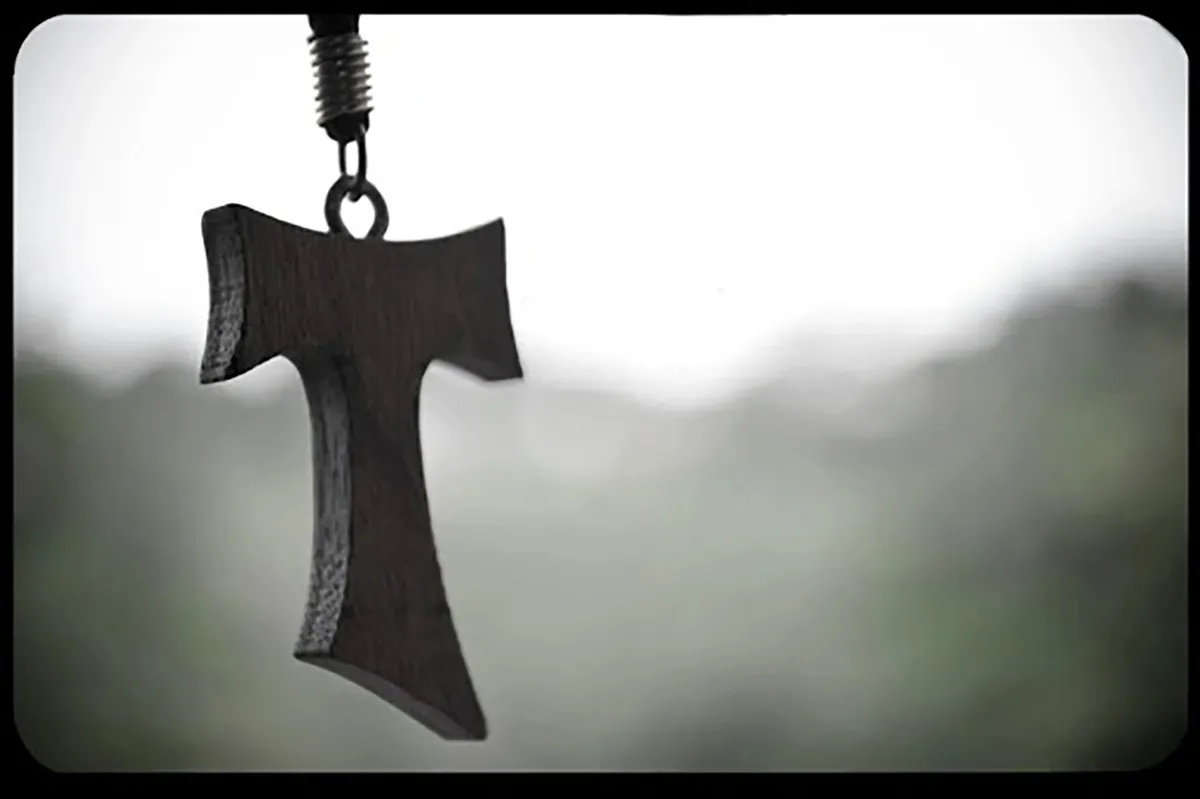
The Tau Cross is perhaps the best-known Franciscan symbol.
Its shape resembles the last letter of the Hebrew alphabet and was already used in the Old Testament as a sign of God’s protection. Saint Francis adopted the Tau after hearing Pope Innocent III preach about it during the Fourth Lateran Council in 1215.
Francis often signed letters with the Tau and used it as a blessing.
Spiritual Meaning of the Tau Cross
The Tau Cross represents:
- Salvation through Christ
- Obedience to God’s will
- Repentance
- Spiritual renewal
- Hope
- Protection
Many Franciscans still wear a wooden Tau Cross around their neck as a reminder to follow Jesus with humility.
The Franciscan Coat of Arms
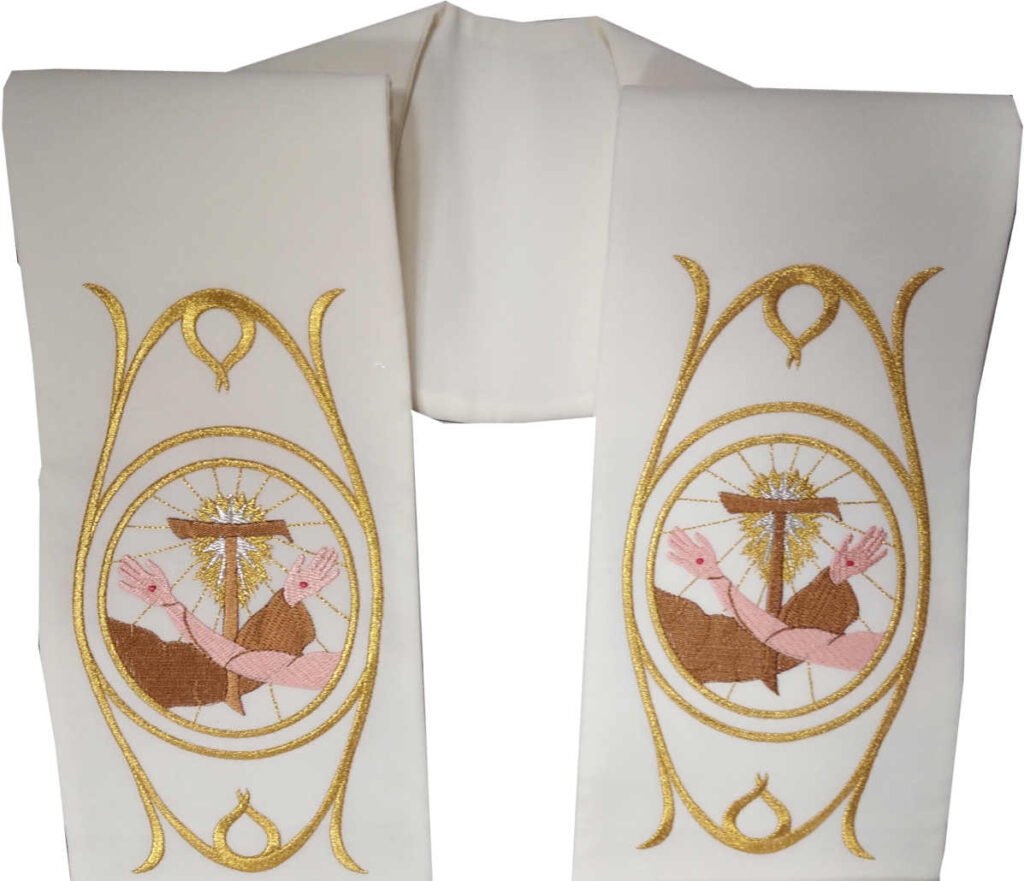
One of the most recognizable Franciscan images is the Franciscan Coat of Arms.
It shows two crossed arms beneath a cross.
One arm belongs to Jesus Christ.
The other belongs to Saint Francis.
Both hands display the marks of the crucifixion, emphasizing that Francis desired to imitate Christ completely.
Meaning of the Franciscan Coat of Arms
The crossed arms symbolize:
- Union with Christ
- Self-sacrifice
- Holiness
- Faithfulness
- Following Jesus through humility
This emblem reminds believers that Christian discipleship requires love expressed through action.
The Franciscan Cord
The Franciscan habit includes a simple white rope tied around the waist.
This rope is called the Franciscan Cord.
It usually contains three knots.
Meaning of the Three Knots
Each knot represents one of the traditional evangelical vows:
- Poverty
- Chastity
- Obedience
The cord reminds Franciscans that true freedom comes through surrendering their lives to God rather than seeking worldly success.
The Brown Franciscan Habit
The simple brown robe worn by Franciscan friars reflects the lifestyle Saint Francis embraced.
Instead of wearing expensive clothing, he chose garments similar to those worn by poor laborers.
What the Habit Represents
The habit symbolizes:
- Simplicity
- Humility
- Equality
- Service
- Detachment from wealth
Its plain appearance reflects the Franciscan commitment to living close to the poor and depending on God’s providence.
The Franciscan Crown

The Franciscan Crown is a special rosary consisting of seven decades.
It honors the Seven Joys of the Blessed Virgin Mary and has been prayed for centuries within the Franciscan family.
The Seven Joys Remembered
The Franciscan Crown reflects these joyful events:
- The Annunciation
- The Visitation
- The Birth of Jesus
- The Visit of the Wise Men
- Finding Jesus in the Temple
- The Resurrection
- Mary’s Assumption and Heavenly Glory
Unlike many devotional practices focused primarily on suffering, the Franciscan Crown encourages Christians to remember God’s joy and hope.
The Stigmata
In 1224, Saint Francis received the stigmata while praying on Mount La Verna.
The stigmata are wounds corresponding to those of Jesus during the crucifixion.
This event became one of the defining moments in Franciscan history.
Spiritual Significance
The stigmata represent:
- Complete union with Christ
- Deep love for Jesus
- Sacrifice
- Compassion
- Holiness
Rather than seeking extraordinary experiences, Francis desired only to imitate Christ faithfully.
Birds and Animals
Animals appear frequently in Franciscan artwork because Saint Francis viewed all creation as a gift from God.
According to tradition, he preached to birds and showed kindness toward every living creature.
Meaning of Animals in Franciscan Tradition
Animals symbolize:
- God’s love for creation
- Harmony
- Respect for life
- Stewardship of nature
- Peace among all living beings
This is one reason Saint Francis is widely recognized as the patron saint of animals and ecology.
The Sun, Moon, and Stars
Saint Francis wrote the beautiful “Canticle of the Creatures,” praising God through creation.
In this hymn, he refers to Brother Sun, Sister Moon, wind, water, fire, and earth.
Their Spiritual Meaning
These natural elements remind believers that:
- Creation reflects God’s glory.
- Humanity should care for the environment.
- Every creature praises its Creator.
- Gratitude should shape daily life.
These symbols continue to inspire Christians to protect the natural world.
The Dove and Olive Branch
Although not unique to the Franciscan tradition, the dove often appears in Franciscan art.
It represents peace, one of Saint Francis’ central teachings.
The olive branch reinforces this message by symbolizing reconciliation and hope.
Together they encourage Christians to become peacemakers within families, communities, and nations.
The Cross
For Saint Francis, the cross was the ultimate sign of God’s love.
His prayer before the San Damiano Cross transformed his life and led him to rebuild the Church spiritually.
Lessons from the Cross
The cross reminds believers to:
- Trust God completely.
- Love sacrificially.
- Forgive others.
- Serve without expecting recognition.
- Live faithfully every day.
Every Franciscan symbol ultimately points back to Christ and His saving work.
The Meaning of Simplicity in Franciscan Symbols
One striking feature of Franciscan symbolism is its simplicity.
Unlike symbols designed to display power or wealth, Franciscan symbols often use ordinary objects such as:
- Wood
- Rope
- Brown cloth
- Crosses
- Nature
- Open hands
This reflects Saint Francis’ belief that God often works through ordinary people and simple acts of love.
How Franciscan Symbols Inspire Christians Today
These symbols continue to influence believers across cultures and denominations.
Many Christians display Franciscan symbols in their homes, churches, schools, or prayer spaces because they serve as daily reminders of Gospel living.
They encourage people to:
- Pray faithfully.
- Care for the poor.
- Respect creation.
- Live peacefully.
- Practice generosity.
- Grow in humility.
- Follow Jesus wholeheartedly.
Their timeless message remains relevant in today’s fast-moving world.
Common Misunderstandings About Franciscan Symbols
Some people assume these symbols are merely historical decorations or religious artwork.
In reality, they carry deep spiritual meaning rooted in Scripture and Christian tradition.
It is also important to remember that Franciscans do not worship these symbols. Instead, the symbols point believers toward Christ and remind them to live according to the Gospel.
Understanding this distinction helps Christians appreciate the richness of Franciscan spirituality without confusing symbols with the faith they represent.
How to Reflect on Franciscan Symbols in Daily Life
You do not have to become a Franciscan to benefit from these meaningful reminders.
Consider these simple practices:
- Wear a Tau Cross as a reminder to follow Christ.
- Spend time outdoors thanking God for creation.
- Pray for peace every morning.
- Help someone in need without expecting recognition.
- Practice gratitude for life’s simple blessings.
- Choose kindness over conflict.
- Read passages from the Gospels regularly.
Small actions inspired by Franciscan values can strengthen your faith and encourage others.
Conclusion
Franciscan symbols and their meanings continue to inspire millions of Christians with timeless lessons of faith, humility, peace, and love. From the Tau Cross and Franciscan Coat of Arms to the simple brown habit and the beauty of creation, every symbol reflects the life and mission of Saint Francis of Assisi.
These symbols are more than historical traditions. They invite believers to live the Gospel through compassion, simplicity, service, and trust in God. As Christians seek a deeper relationship with Christ, Franciscan symbols remain meaningful reminders that true greatness is found not in power or wealth but in humble love and faithful discipleship.
Whether you are exploring Franciscan spirituality for the first time or deepening your understanding of Christian history, these enduring symbols offer practical inspiration for living a life centered on faith, hope, and charity.

Leave a Reply